Body Doubling: What It Is and Why It Works for ADHD
Stan · · 10 min read
Body doubling means doing your task while someone else is present. Here's what it is, why it works for ADHD, the research, and how to try it this week.
You have one form to fill out. It takes eight minutes. You've known about it for three days, and it's still not done. Then a friend sits down across the table to do their own work, says nothing to you, and somehow the form is finished before they've opened their laptop.
That's body doubling. Nobody helped you. Nobody watched. Someone was just there, and the wall between you and the task quietly came down. If that sounds familiar, or a little absurd, you're in the right place.
I build an app for getting unstuck, so I think about why this works more than most people do. The short version: it's one of the most reliable, lowest-effort tricks an ADHD brain has, and you can try it this afternoon.
What body doubling is
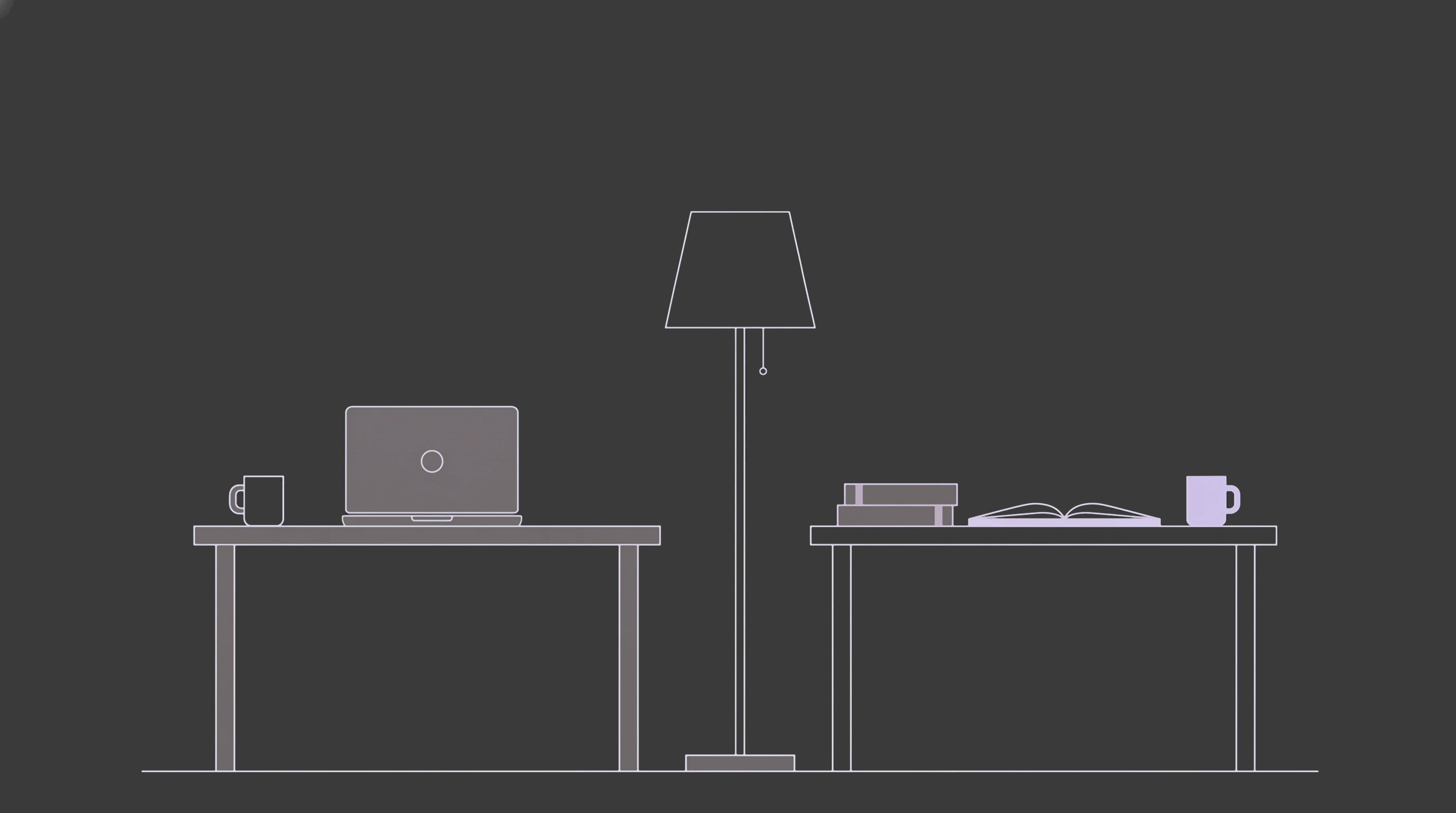
You do a task while another person is present, in the room or on a call, each working on your own thing. That's body doubling. The other person doesn't help, supervise, or even talk to you. Their presence alone creates gentle structure and accountability that an ADHD brain often can't generate on its own, which makes starting feel possible.
The person you work alongside is the "body double." They can be a friend, a coworker, a stranger in a co-working room, or a face on a video call.
The tasks don't have to match. You could be answering emails while they fold laundry. The shared thing is just the simple fact of doing it near someone else, not the work itself.
Notice what body doubling is not. It isn't being coached, tutored, or managed. Nobody checks your output. It also isn't collaboration, where you split a task and do it together.
The whole point is that you do your own work, on your own, just not alone. That distinction is what makes it so low-friction: there's nothing to coordinate and nothing to perform.
Where the term comes from
The phrase comes from the ADHD coaching world. An ADHD coach named Linda Anderson is credited with naming the "body double" in the 1990s, after noticing that a client with ADHD could breeze through dull tasks when another person was nearby, then stall completely when working alone. She watched this "phenomenon of just being there" and named it.
Anderson's account, published by the Attention Deficit Disorder Association, describes a client who handled routine work easily when his wife sat in the room, doing unrelated things. No instruction passed between them. The other person's calm, focused presence seemed to be the active ingredient, and the client's brain borrowed it.
For years the idea lived mostly in coaching circles and ADHD communities, passed around as folk wisdom. It only reached the mainstream recently, carried by social media and the rise of virtual co-working. Researchers who later studied it noted that the strategy had been "nameless to many neurodivergent individuals," something people stumbled into on their own and only heard a word for afterward.
Why body doubling works
Body doubling works through a few overlapping mechanisms: another person's presence nudges your focus up, it creates light accountability without anyone supervising, and it supplies external structure your brain has trouble building alone. Together these lower the effort of starting, which is exactly the point where ADHD brains tend to stall.
Start with presence itself. Social psychology has known for decades that simply having another person around changes how we perform. In a classic 1965 paper in Science, Robert Zajonc described "social facilitation": the mere presence of others tends to sharpen performance on tasks you already know how to do. Filling out a form, tidying a room, plowing through email are all well-learned tasks. Presence gives them a small lift, no pressure required.
Then there's accountability, but a soft kind. You're not reporting to anyone, yet some part of you doesn't want to be the person who sat there doing nothing while someone else worked. That gentle social weight is enough to tip you over the starting line, without the dread that a boss or a deadline brings. It's structure you can borrow instead of manufacture.
This matters because the thing ADHD breaks most is the launch. Task initiation, getting started, is one of the executive functions ADHD disrupts, as organizations like CHADD lay out plainly. When your own brain can't reliably fire that starter, a second person in the room acts as a kind of external ignition. You're not weak for needing it. You're using a workaround for a system that genuinely runs differently.
If a lot of this lands close to home, a quick, free self-screen like the ASRS-5 ADHD screener can help you decide whether to raise it with a clinician. A screener won't diagnose you, but it's a low-stakes first data point.
What the research actually says
Here's the honest version: the research on body doubling specifically is thin and very new. People have used it for years, but formal study barely existed until recently, and there are no controlled trials proving it works. Most of the support is mechanism-based and based on what people report, which is meaningful but not the same as hard proof.
The first formal academic study of body doubling appears to be a 2024 paper by Tessa Eagle and colleagues in ACM Transactions on Accessible Computing. They surveyed 220 mostly neurodivergent people about how, when, and why they body double. Their finding is partly that body doubling had been a real, useful strategy hiding in plain sight, something people "naturally found worked and heard about later," with no academic study of the term before theirs.
What people reported in that work tracks with the mechanisms above. Participants described body doubling as using the presence of others to start, stay focused on, or finish a task, and pointed to motivations like generating momentum and staying on track. The researchers noted they had personally encountered the practice "primarily in ADHD spaces," even though plenty of non-ADHD people use it too.
There's also indirect evidence from adjacent research. In a 2023 qualitative study of what helps adults with ADHD exercise, Michelle Ogrodnik and colleagues found that nearly all participants named getting active with another person, which several described as "body-doubling," as a key facilitator. One participant put it simply: body doubling was "a very strong motivator" that made things easier. That's a different task, but the same lever.
So the takeaway is calibrated, not breathless. The lived-experience evidence is strong and consistent, the underlying psychology is well established, and the body-doubling-specific science is early. If something this cheap and low-risk helps you, you don't need to wait for a randomized trial to keep using it. Just hold it as a tool that works for many, not a cure that works for all.
In-person vs virtual body doubling
A kitchen table and a video grid run on the same engine, and mostly differ in logistics. In-person means a physical space: a friend at the table, a coworker at the next desk, a library. Virtual means doing it remotely, over a video call, a co-working room, or a live stream. The mechanism, presence plus light accountability, carries across both.
In-person tends to feel strongest because the presence is undeniable. Someone is physically there, and your brain registers it without effort. The catch is availability. You can't always summon a friend to sit with you at 9pm on a Tuesday, and not everyone has a coworker nearby who's up for quiet parallel work.
Virtual body doubling solves the availability problem. The researchers who studied this noted that a body double can be "collocated or remote, recorded or live, known or a stranger," and that many people get the effect from video or voice calls, live streams, even pre-recorded videos with another person on screen. That flexibility is why a whole category of apps now exists for it, where you join a room of strangers and everyone works in silence on camera.
Whether remote works as well as in-person depends on the person and the setup. Some people need a real body in the room; others get plenty from a muted video grid. The useful move is to try both and notice which one actually gets you working. If you want the specific options, we compared the main tools in our guide to the best body doubling apps.
How to try it this week
You can test body doubling in the next few days without any apps or money. Pick one task you've been avoiding, find one other human to be present, in person or on a screen, and do the task alongside them while they do their own thing. Keep it short, keep it low-stakes, and pay attention to whether starting felt easier.
A few concrete ways to find a body double fast:
- Text a friend who also has stuff to get done and propose a "silent work session," 30 minutes, each on your own task, on a video call or side by side.
- Sit near a coworker, roommate, or family member who's already working and quietly start your own thing next to them.
- Join a virtual co-working room. Several apps pair you with a stranger or drop you into a focus room with cameras on and mics off. We cover the main ones in the body doubling apps guide.
- Try a low-tech version: put a friend on speaker, agree to both work, and check back in when a timer goes off.
Set a small fence around it. Pick a length, ten to forty minutes, and let yourself stop when it ends. Most of the resistance is in the first ninety seconds, so the only job is to get past those. Tell your double what you're starting on out loud, even just "okay, I'm doing the form now." Naming it makes it real and gives the gentle accountability something to grab.
One honest note: it can feel awkward the first time, asking someone to just exist near you while you work. It passes. Most people find the silence comfortable within a few minutes, and a surprising number of friends are relieved you asked, because they have their own avoided task waiting.
Body doubling vs an accountability partner
Both lean on another person, but they show up at different moments. A body double helps in the act of doing, through presence during the task. An accountability partner helps around the task, by checking whether you did what you said you would. One is company while you work; the other is a follow-up afterward.
With an accountability partner, the pressure is in the report-back. You tell someone you'll finish the slides by Friday, and knowing they'll ask creates the motivation. It's powerful for follow-through, but it does little in the frozen moment when you can't make yourself open the file. The check-in comes later.
Body doubling targets that frozen moment directly. There's no goal to declare and no report due, just a person beside you while you start. For ADHD, where the failure point is so often initiation rather than intention, that real-time presence is frequently the more useful of the two. You can absolutely use both: a double to get started, a partner to make sure it stayed done.
When it doesn't work
For some people, another person in the room is the problem, not the fix. It won't help everyone or fix every kind of stuck. Some find another person distracting, feel watched, or get pulled into conversation. If presence raises your stress instead of lowering it, that's real information, not a personal failure. The strategy is one tool, not the tool.
It also tends to fall flat when the block isn't really about starting. If you're in a deep ADHD shutdown, foggy, weighted, unable to start anything, adding a person to the room can feel like more input when you need less. The same goes for true overwhelm, where the issue is too many tasks rather than the absence of company. Those need a different move first. Our piece on ADHD paralysis walks through what helps when you're frozen and a body double isn't enough.
If body doubling stalls, a few adjustments are worth trying before you write it off. Switch in-person for virtual or the reverse. Pick a quieter, lower-chat partner. Pair it with a tiny first step so there's an obvious thing to start on.
And if the task itself is a blurry knot, getting it out of your head first, on paper or out loud, often unblocks more than any company can. Sometimes the missing piece isn't a person. It's clarity about what you're even trying to do.
Where BrightMind fits
I'll be straight: an app is not a human body double, and I won't pretend otherwise. The presence of a real person is its own thing, and if a friend or a co-working room works for you, use it. What we built BrightMind to do is the adjacent job: turning an overwhelming task into one small step you can start.
When you're frozen, you talk it through out loud and BrightMind reflects the mess back as something smaller, then hands you a single tiny next step instead of a fog. It can call you at a time you choose, so the nudge to start arrives without you opening anything, and it drops whatever you decide to do into its own task list, or into Todoist or TickTick if you use them, so it doesn't fall out of your head. It's an assistant for getting unstuck and into motion, not a stand-in for human presence.
If you want the longer version of where an AI helps and where it falls short, I wrote up whether an AI can be your body double.
So think of it as complementary. A real body double gives you presence. BrightMind gives you a calm voice to untangle the task and a tiny step to begin with. Plenty of people use both, a co-working room for the hours, the app for the moments they can't see the first move. If that second part is your sticking point, take a look at BrightMind.
The takeaway
Strip away the neuroscience and it comes down to one thing: starting alone is the hard part, and another person's presence makes the start easier. It's one of the cheapest, lowest-effort tools an ADHD brain has. You need one other human, in the room or on a screen, while you do the avoided thing.
The evidence is early but the practice is old, and the downside is basically zero. So pick the task that's been sitting there, text someone, and try a silent work session this week. If it helps, you've got a new tool. If it doesn't, you've lost half an hour and learned something about how your brain likes to work. Either way, start smaller than feels reasonable, and don't do it alone.
References
- Eagle, T., Baltaxe-Admony, L. B., & Ringland, K. E. (2024). "It Was Something I Naturally Found Worked and Heard About Later": An Investigation of Body Doubling with Neurodivergent Participants. ACM Transactions on Accessible Computing, 17(3), Article 16. ACM Digital Library
- Anderson, L. The ADHD Body Double: A Unique Tool for Getting Things Done. Attention Deficit Disorder Association (ADDA). add.org
- Zajonc, R. B. (1965). Social facilitation. Science, 149(3681), 269-274. PubMed
- Ogrodnik, M., Karsan, S., Malamis, B., Kwan, M., Fenesi, B., & Heisz, J. J. (2023). Exploring Barriers and Facilitators to Physical Activity in Adults with ADHD: A Qualitative Investigation. Journal of Developmental and Physical Disabilities, 36, 307-327. PMC
- Song, P., Zha, M., Yang, Q., Zhang, Y., Li, X., & Rudan, I. (2021). The prevalence of adult attention-deficit hyperactivity disorder: A global systematic review and meta-analysis. Journal of Global Health, 11, 04009. Journal of Global Health
- CHADD (Children and Adults with Attention-Deficit/Hyperactivity Disorder). Executive Function Skills. chadd.org
Frequently asked questions
- What is body doubling for ADHD?
- Body doubling for ADHD means doing your task while another person is present, in the room or on a call, each working on their own thing. Their presence creates gentle external structure and accountability that an ADHD brain often can't generate alone, which makes starting and staying on a task feel possible instead of impossible.
- Why does body doubling work?
- Body doubling works because another person's presence raises focus and creates light accountability without anyone watching or helping you. It borrows external structure your brain struggles to make on its own, lowers the effort of starting, and gives you someone to be quietly in sync with. The result is momentum you couldn't reach alone.
- Does body doubling work for everyone?
- No. Body doubling helps a lot of people, especially with ADHD, but it isn't universal. Some find another person distracting, feel watched, or get pulled into conversation. Formal research is still thin and mostly based on what people report, not controlled trials. Treat it as one tool to test, not a guaranteed fix.
- What is virtual body doubling?
- Virtual body doubling is body doubling done remotely, over a video call, a co-working room, a live stream, or even a recorded video, instead of sharing a physical space. You work alongside someone on screen, each on your own task. It makes the strategy available any time, without needing a friend or coworker physically nearby.