ADHD Task Pile-Up: How to Reset When Everything's Overdue (and Beat the Guilt Spiral)
Stan · · 12 min read
ADHD task pile-up is when overdue tasks stack up, guilt takes over, and you stop opening the app. Here's why it happens and how to reset, re-plan, and start again.
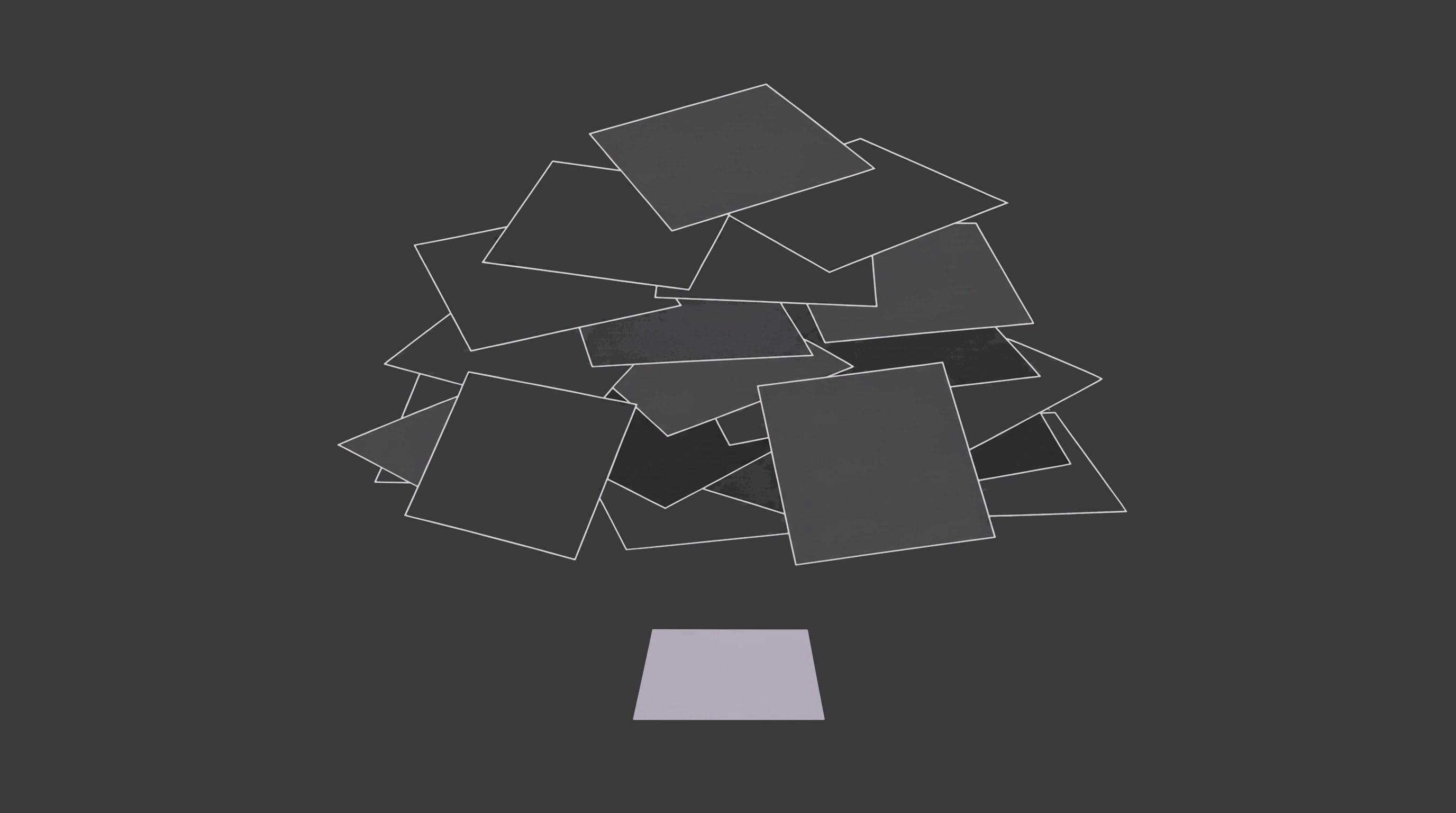
You open your task app for the first time in a week, and there it is. A wall of red. Eleven things due three days ago, a couple from last month, all of them staring back like a list of everything you've failed at. So you close the app. Opening it made you feel worse, and your brain is very good at not doing things that make you feel worse.
That's ADHD task pile-up, and the cruelest part is the loop. The more tasks stack up, the worse you feel. The worse you feel, the less you can face the stack. If you've ever abandoned a perfectly good system because it turned into a museum of your guilt, you're in the right place.
I build an app for exactly this moment, so I've spent more time on it than is reasonable. The way out below works whether or not you ever open BrightMind.
What ADHD task pile-up actually is
ADHD task pile-up is when overdue and unfinished tasks accumulate faster than you clear them, until the backlog itself becomes the obstacle. It isn't a planning failure or laziness. It's the predictable result of how the ADHD brain handles time, memory, and difficult feelings, and it feeds on the guilt it creates.
A normal busy week ends and resets. Pile-up doesn't. You go strong for a while, then miss a few days, and the unmaintained list starts collecting tasks you rolled forward, intentions you forgot, and things you only added because you were afraid of forgetting them. Come back a week later and the list isn't a tool anymore. It's a monument.
One person on r/productivity put it perfectly: "I've created all these ways to remind myself of what I'm not doing." That's the trap. The system you built to feel on top of things becomes the thing reminding you that you're not. So you stop opening it, and the pile grows in the dark.
If this is hitting close and you're not sure whether ADHD is part of the picture, a quick free self-screen like the ASRS-5 ADHD screener is a low-stakes first data point. A screener isn't a diagnosis, but it's a useful place to start.
Why the tasks pile up in the first place
Tasks pile up for three concrete reasons, and none of them is a character flaw. Time blindness makes you underestimate how long things take, so you overcommit. A weaker grip on future deadlines lets items slip. And the intentions themselves can fall out of memory before you act on them. The list grows faster than anyone could realistically clear it.
Start with time. Adults with ADHD show measurable differences in how they perceive and reproduce time, and many describe time as moving faster than it does (Weissenberger and colleagues, 2021). So when you plan tomorrow, you genuinely believe you can fit eight things into a day that has room for three. This isn't unique to ADHD, either. Everyone underestimates how long tasks take, and we keep doing it even when past tasks ran long every single time. That's the planning fallacy (Buehler, Griffin, and Peetz, 2010). Put a universal estimating bug on top of ADHD time blindness and you get a list that was overstuffed the moment you wrote it.
Then there's memory. A lot of tasks don't get avoided, they get forgotten. Prospective memory is the skill of remembering to do something later, and adults with ADHD carry out fewer of their own real-life intentions than people without it. In one study, that gap statistically explained part of why ADHD leads to procrastination (Altgassen and colleagues, 2019). A task that vanishes from your mind doesn't feel like avoidance. It feels like it was never there, right up until it resurfaces as overdue.
The last reason is the most human. ADHD lists tend to fill with everything you'd love to become. Learn the guitar, start running, reply to that person from six months ago. The list ends up ninety percent aspiration, which means it's permanently undoable, which means every glance at it confirms you're behind. That isn't a planning system. It's a wishlist wearing a planning system's clothes.
The guilt spiral: why undone tasks make you do even less
Here's the engine of the whole thing. Avoiding a task is rarely about the task. It's about the feeling the task gives you. Putting it off delivers a small hit of relief right now, and your brain takes the deal. With a backlog, every overdue item is one more source of that bad feeling, so the safest move becomes avoiding the entire list.
Researchers call this the short-term mood repair theory of procrastination. We delay not because we're bad at time management, but because avoiding an unpleasant task regulates how we feel in the moment, at the expense of our future self (Sirois and Pychyl, 2013). Read the wall of red through that lens and it makes perfect sense. Each red item is a tiny jolt of "I failed," and closing the app makes the jolts stop. You're not being lazy. You're managing your mood the only way that works in two seconds.
It helps to separate guilt from shame, because the ADHD community draws this line constantly and it matters. Guilt says "I did a bad thing." Shame says "I am a bad thing." Guilt can nudge you to act. Shame makes you hide, and a pile of overdue tasks is a shame machine, quietly turning "I forgot to send an email" into "I'm the kind of person who can't even send an email."
ADHD pours fuel on this. Emotion dysregulation, meaning emotions that hit harder and are harder to bring back down, affects somewhere between 34 and 70 percent of adults with ADHD (Soler-Gutierrez and colleagues, 2023). So the bad feeling attached to the list doesn't just sit there. It spikes. You'll see this called rejection sensitive dysphoria online, and the term resonates for a lot of people, though the better-studied name for the underlying mechanism is emotion dysregulation. Either way, the felt experience is real: opening the app physically hurts a little, so you don't.
Why "just try harder" makes it worse
The standard advice (push through, be disciplined, just start) treats a pile-up as a willpower problem. It isn't, so that advice tends to add a fresh layer of failure on top of the ADHD paralysis freeze. Rigid systems that punish a missed day, marathon to-do lists, and shame used as motivation all reliably make ADHD task pile-up worse, not better.
The single most common self-sabotage is the over-stuffed "today" list. You cram everything in so nothing gets forgotten, then you finish three of fifteen items and go to bed feeling like a failure, even though three things is a good day. As one person on r/ADHD described it, if you load the list and only cross off ten percent, "you end up feeling reeealllyyy shitty." The list designed to keep you on track becomes the thing proving you're off it.
Rigid systems do the same damage from a different angle. Recurring tasks and streak counters that nag you the instant you miss a day turn the app into, in one r/todoist user's words, "a prison doing labor told by your past self." Miss one day and the whole structure is suddenly screaming at you. For a brain already prone to shame, that's a reason to walk away entirely.
There's a subtler trap too, and it's worth naming because the usual advice ignores it. "Just break it into small steps" works, but not forever if it's the same trick every time. One r/ADHD commenter nailed it: the bite-size approach "worked for about a week and then I think my brain realized I was tricking it." Novelty matters. A reset routine that never changes becomes background noise, which is part of why the recovery moves below are principles to rotate through, not a rigid script to run identically every day.
Start by forgiving yourself, yes, really
The first move is the one that feels least productive: drop the self-blame. In a study that followed students across two exams, the ones who forgave themselves for procrastinating before the first exam went on to procrastinate less before the next one, and the reason was that forgiveness lowered the negative feelings driving the avoidance (Wohl, Pychyl, and Bennett, 2010). Self-compassion isn't soft. It cuts the fuel line of the spiral.
This follows directly from the mood-repair mechanism. If you avoid the list because it makes you feel bad, then lowering how bad it makes you feel is not a nice-to-have, it's the actual lever. Self-compassion is also associated with less procrastination, not more (Sirois, 2014). The fear that being kind to yourself means letting yourself off the hook has it backwards. Self-criticism is what keeps you stuck, because you can't approach a list you're using to beat yourself up.
In practice this is small and unglamorous. When you catch the spiral, say the plain version out loud: "I'm behind on a list, this is the ADHD thing, it's not a referendum on me." Talk to yourself the way you'd talk to a friend who was drowning in the same pile, because you would never say to them what you say to yourself. And borrow the line the community keeps repeating for a reason: good enough done is still done.
Declare task bankruptcy
Once the shame is turned down, get ruthless with the list. Task bankruptcy means accepting that you will not do most of what piled up, and clearing it on purpose instead of letting it haunt you. Delete what no longer matters. Give everything else a later date or no date at all. A shorter list you trust beats a complete list you avoid.
Go through the backlog with three questions and move fast. Does this still actually matter? What really happens if it never gets done? And what's the honest next date, if any? Most items fail the first two questions. Delete them. The people who do this report the same surprising thing: the backup they nervously kept, just in case, is almost never needed. The mental clarity, on the other hand, is immediate.
For the survivors, lean on a trick the Todoist and TickTick crowds figured out years ago: use the date as when you'll actually do something, not a guilt-trip deadline, and let tasks have no date at all. A task with no date can't go overdue, so it can't add to the wall of red. If you want the mechanics, the Todoist for ADHD and TickTick for ADHD guides walk through filters and dates set up this way. And if your head is too loud to triage cleanly, do an ADHD brain dump first to get everything out where you can see it, then sort.
Re-plan by planning less
Now rebuild the day, smaller than feels right. Because of time blindness and the planning fallacy, your instinct for what fits in a day is the exact thing that overfilled the list in the first place. Pick a tiny number of must-dos, three is plenty, and leave real white space. A plan you finish rebuilds trust. A plan you fail confirms the story that you can't.
The concrete version: add up rough time estimates for what you're about to schedule, then double them, because your first estimate is the unreliable part. If tomorrow's plan needs twenty hours, something has to come off, and better that you cut it now than that the day cuts it for you at 11pm. Leaving slack isn't slacking. It's the difference between a day that ends in a small win and one that ends in more red.
This is also the place an outside view earns its keep, since the one thing you can't fully trust here is your own sense of how long things take. A friend, a coach, or a tool that reflects a realistic plan back at you is doing real work, not babysitting. The goal is a list short enough that finishing it is genuinely possible, because finishing anything is what breaks the "I always fall behind" loop.
Pick one tiny, already-decided next step
End every reset with a single concrete action you've decided in advance and tied to a moment. Not "work on the report" but "after I pour my coffee, I open the doc and write one sentence." This format, called an implementation intention, is one of the most reliable tools in all of behavior science, and it helps most exactly where ADHD struggles: getting started and not getting derailed.
The evidence is unusually strong. Across 94 studies, pre-committing to an if-then plan had a medium-to-large effect on whether people actually followed through, well beyond simply intending to do the thing (Gollwitzer and Sheeran, 2006). The reason it fits ADHD so well is that it removes the in-the-moment decision, which is the part the ADHD brain taxes hardest. You're not deciding what to do when you sit down. You already decided. You just follow the cue.
Make the step embarrassingly small, smaller than feels worth it. The freeze lives at the launch point, so you only have to beat the launch. This is the whole idea behind the BrightMind Unstuck flow: when you can't find the first thread, you talk through what's stuck, it reflects the knot back as something smaller, and you leave with one tiny next action instead of a fog. You can do a low-tech version with a voice memo or a patient friend. The mechanism is the same. Say it out loud, make it tiny, tie it to a cue. And if the launch still won't happen alone, borrow someone else's momentum: a friend on a call, or one of the body doubling apps built for exactly this.
A reset you can run every day
The pile-up comes back if the list only gets attention once it's already a crisis. A short daily or weekly review keeps it from rotting. Spend five minutes looking at what's actually there, move what slipped, delete what died, and pick tomorrow's three. The point isn't to be thorough. It's to keep the list small, current, and safe to open.
Keep this ritual deliberately low-stakes, because a review you dread is a review you'll skip. No streak to break, no punishment for missing a day, no requirement to touch every item. Some people anchor it to coffee in the morning, some to winding down at night, some to a Sunday reset. The best version is the one you'll actually do twice. And because the same routine eventually goes invisible, let it change. Some days it's a full triage, some days it's just "what are the three things," some days it's deleting ten dead tasks and closing the app.
This loop, review yesterday and what's overdue, decide what to move or drop, find what's genuinely worth doing, and set a realistic next step, is exactly what BrightMind's Organize flow is built to walk through with you when doing it alone feels like too much. But the routine is yours whether you run it in an app, a notebook, or your head on the walk home. What matters is that the list never again gets a week in the dark to grow into a monster.
When the pile-up is bigger than a blog post
If this is the texture of your life rather than a rough month, it may be worth real support, and that's not a failure either. Structured therapy genuinely works for this. A clinician can help you build the skills directly and figure out whether medication fits. I build software, I'm not a doctor, and nothing here is medical advice.
The research here is solid and specifically about ADHD. In a randomized trial, adding cognitive behavioral therapy focused on organizing and planning to medication left far more adults improved than a comparison treatment, 67 percent versus 33 percent (Safren and colleagues, 2010). A separate trial of group therapy targeting time management, organization, and planning found participants several times more likely to respond than those in supportive therapy (Solanto and colleagues, 2010). These aren't vague "be more mindful" interventions. They teach the exact skills the pile-up erodes, while working on the avoidance underneath. If you want a starting point before booking anything, the ASRS-5 screener is a quick, free first step.
You're not behind on life, you're behind on a list
The pile-up is a list problem wearing a character problem's clothes. The list can be reset in about ten minutes. The shame is the slow part, which is why forgiving yourself comes before deleting anything, and why "just try harder" has never once worked. Lower the feeling, cut the backlog, plan less than you think you can do, and start with one step so small it's almost funny.
That sequence is the whole reason BrightMind exists. When you're staring at the wall of red and can't make yourself touch it, you talk, it helps you triage what's real, and it hands you one small thing to do next, then drops it into BrightMind's own task list, or into Todoist or TickTick if you use them, so it doesn't fall back out of your head. If you've read this far and the wall of red felt familiar, that's the thing worth trying. Take a look at BrightMind, or just steal the steps above. Either way, the next time the list has buried you, forgive first and start smaller than feels reasonable. That's almost always the move.
References
- Weissenberger, S., Schonova, K., Buttiker, P., Fazio, R., Vnukova, M., Stefano, G. B., & Ptacek, R. (2021). Time perception is a focal symptom of attention-deficit/hyperactivity disorder in adults. Medical Science Monitor, 27, e933766. PubMed
- Buehler, R., Griffin, D., & Peetz, J. (2010). The planning fallacy: Cognitive, motivational, and social origins. Advances in Experimental Social Psychology, 43, 1-62. ScienceDirect
- Altgassen, M., Scheres, A., & Edel, M.-A. (2019). Prospective memory (partially) mediates the link between ADHD symptoms and procrastination. ADHD Attention Deficit and Hyperactivity Disorders, 11(1), 59-71. Springer
- Sirois, F. M., & Pychyl, T. A. (2013). Procrastination and the priority of short-term mood regulation: Consequences for future self. Social and Personality Psychology Compass, 7(2), 115-127. Wiley
- Soler-Gutierrez, A.-M., Perez-Gonzalez, J.-C., & Mayas, J. (2023). Evidence of emotion dysregulation as a core symptom of adult ADHD: A systematic review. PLOS ONE, 18(1), e0280131. PLOS ONE
- Wohl, M. J. A., Pychyl, T. A., & Bennett, S. H. (2010). I forgive myself, now I can study: How self-forgiveness for procrastinating can reduce future procrastination. Personality and Individual Differences, 48(7), 803-808. ScienceDirect
- Sirois, F. M. (2014). Procrastination and stress: Exploring the role of self-compassion. Self and Identity, 13(2), 128-145. White Rose (open access)
- Gollwitzer, P. M., & Sheeran, P. (2006). Implementation intentions and goal achievement: A meta-analysis of effects and processes. Advances in Experimental Social Psychology, 38, 69-119. NCI (PDF)
- Safren, S. A., Sprich, S., Mimiaga, M. J., Surman, C., Knouse, L., Groves, M., & Otto, M. W. (2010). Cognitive behavioral therapy vs relaxation with educational support for medication-treated adults with ADHD and persistent symptoms: A randomized controlled trial. JAMA, 304(8), 875-880. PubMed Central
- Solanto, M. V., Marks, D. J., Wasserstein, J., Mitchell, K., Abikoff, H., Alvir, J. M. J., & Kofman, M. D. (2010). Efficacy of meta-cognitive therapy for adult ADHD. American Journal of Psychiatry, 167(8), 958-968. American Journal of Psychiatry
Frequently asked questions
- Why do people with ADHD let tasks pile up?
- It usually isn't avoidance alone. ADHD comes with time blindness, so you underestimate how long things take and overcommit, and with weaker prospective memory, so intentions slip out of mind before you act. The list grows faster than anyone could clear it, and the guilt that follows makes the whole stack harder to face.
- Is ADHD task pile-up the same as procrastination?
- They overlap but aren't identical. Procrastination is putting off one task to feel better now. Pile-up is what happens when that, plus time blindness and forgotten intentions, compounds over weeks into a backlog. The backlog becomes its own obstacle, because every overdue item adds a hit of guilt that makes opening the list harder.
- How do you deal with a huge backlog of overdue tasks with ADHD?
- Lower the shame first, then get ruthless. Forgive yourself for the pile, since self-blame fuels the avoidance. Delete what no longer matters, give the rest a later date or no date, and rebuild a short list of three must-dos. Finish one tiny, pre-decided step. A small list you trust beats a complete one you avoid.
- What is task bankruptcy?
- Task bankruptcy means accepting you won't do most of what piled up and clearing it on purpose, instead of carrying it as guilt. You delete or archive the old backlog, keep only what still matters, and start fresh with a short, current list. It sounds drastic, but the deleted items are rarely missed.
- How do I stop feeling guilty about unfinished tasks?
- Treat the guilt as information, not a verdict. The pile-up comes from how ADHD handles time and memory, not from a flaw in you. Talk to yourself the way you'd talk to a friend, remember that good enough done is still done, and act on the smallest next step. Lowering the guilt is what frees you to move.
- How do you reset an ADHD to-do list?
- Spend ten minutes on three moves: delete what no longer matters, push what slipped to a realistic date or no date, and choose three must-dos for tomorrow. Leave white space. Then run a short version daily or weekly so the list stays small and safe to open. The goal is current and trusted, not complete.